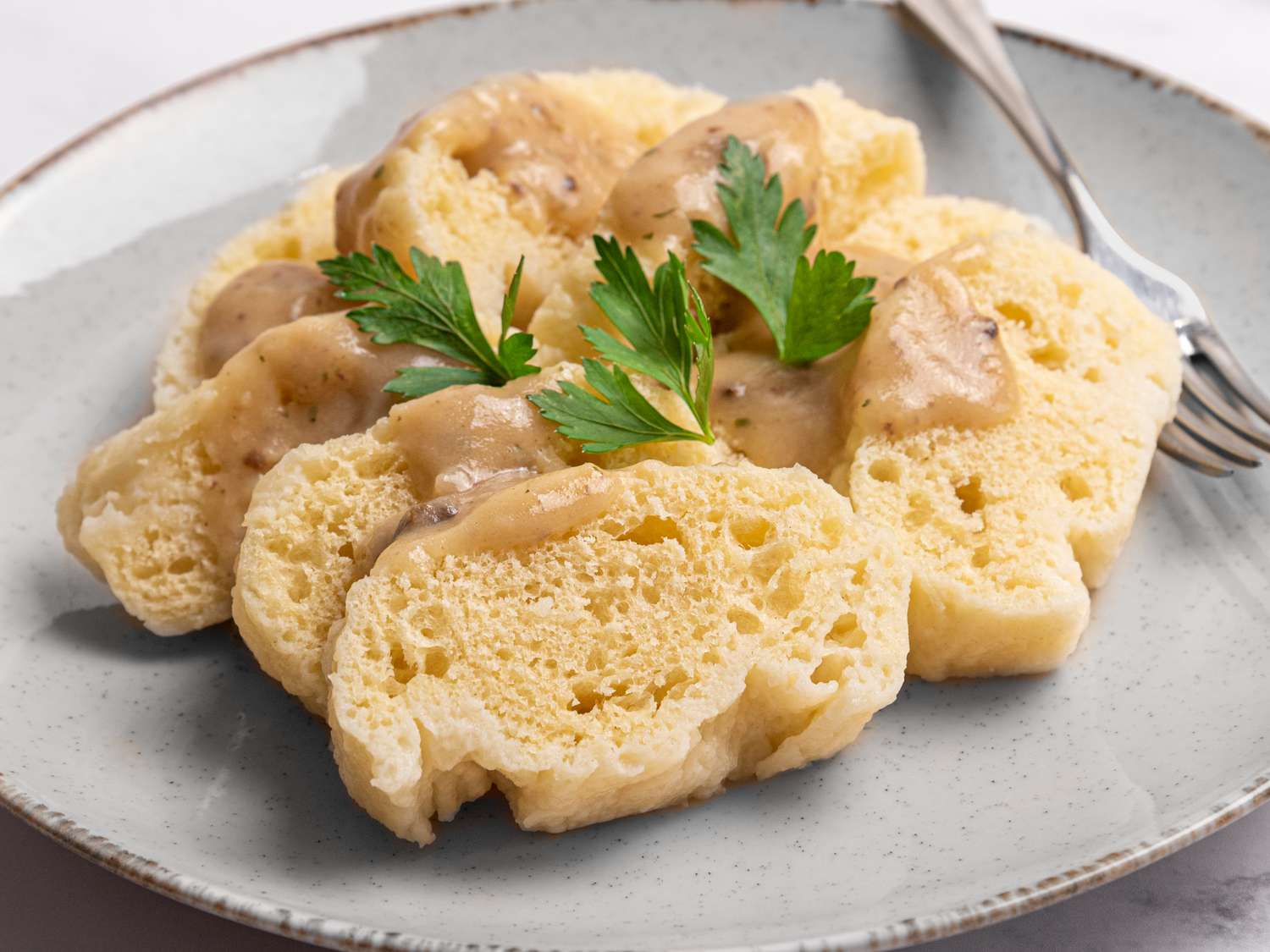
mchec.org – Knedliky are a type of traditional dumpling commonly found in Ukrainian cuisine, as well as in other Central and Eastern European cultures. Made from dough and typically served as a side dish, Knedliky are often paired with meats or used in hearty soups. Their soft, pillowy texture and versatility make them a beloved dish that complements a wide range of savory meals. Whether served with a rich beef stew or in a comforting bowl of broth, Knedliky are a key part of Ukrainian culinary tradition.
What Are Knedliky?
Knedliky are dumplings made from a simple dough mixture that typically includes flour, water, and sometimes eggs or potatoes. The dough is formed into small, round or oval-shaped pieces and then boiled until they are light and fluffy. Depending on the recipe, they may be flavored with ingredients like garlic or herbs to enhance their taste.
In Ukrainian cuisine, Knedliky are commonly served as an accompaniment to main dishes, particularly meats like roast pork, beef, or chicken. They are also enjoyed in soups, where they absorb the flavors of the broth while maintaining their soft texture. The neutral taste of Knedliky makes them an ideal pairing for rich and savory dishes, acting as a satisfying contrast to the main meal.
Ingredients and Preparation of Knedliky
The basic ingredients for making Knedliky include:
- Flour: The foundation of the dough, which gives the dumplings their structure.
- Water: Used to bring the dough together, creating a smooth consistency.
- Eggs: Occasionally included to help bind the dough and provide extra richness.
- Potatoes (optional): Some variations of Knedliky include mashed potatoes in the dough for a lighter, fluffier texture.
- Salt: For seasoning the dough.
- Butter or Oil (optional): Some recipes call for a bit of fat to add flavor and tenderness to the dumplings.
The dough is kneaded until it reaches a soft, smooth consistency, then cut into small pieces. These pieces are boiled in salted water until they rise to the surface, signaling that they are cooked through and ready to serve.
Step-by-Step Guide to Making Knedliky
- Prepare the Dough: Begin by mixing flour, water, and a pinch of salt in a large bowl. If using eggs or potatoes, incorporate them into the dough to add richness and flavor. Knead the dough until it is smooth and elastic.
- Shape the Dumplings: Once the dough is ready, divide it into small portions. Roll each portion into a ball or oval shape, ensuring they are uniform in size for even cooking.
- Boil the Knedliky: Bring a large pot of salted water to a boil. Carefully drop the dumplings into the water, one at a time. Do not overcrowd the pot to ensure that the Knedliky cook evenly. Allow the dumplings to cook until they float to the surface, typically around 10 minutes.
- Serve the Knedliky: Once the Knedliky are cooked, they can be drained and served hot with your choice of side dish. For an extra touch, you can drizzle them with melted butter or sauté them lightly in a pan with onions for added flavor.
Variations of Knedliky
While the basic Knedliky recipe is simple and straightforward, there are numerous regional variations and ways to enjoy these dumplings:
- Knedliky with Potatoes: A common variation in Ukrainian cooking involves adding mashed potatoes to the dough. This creates a softer, lighter dumpling that has a subtle, creamy flavor. Potato Knedliky are often served with pork or beef stews, where their texture complements the richness of the meat.
- Knedliky in Soup: Knedliky are also used in Ukrainian soups, such as borscht or clear broths. In these dishes, they absorb the flavors of the soup, becoming a comforting addition that adds heartiness to the meal.
- Fried Knedliky: After boiling, some people like to fry the Knedliky in butter or oil until they develop a golden-brown crust. This adds an extra layer of flavor and texture, making them even more delicious.
- Herbed Knedliky: Some recipes incorporate herbs such as dill, parsley, or garlic into the dough. These additions enhance the flavor of the dumplings, making them a perfect pairing for meats or hearty vegetable stews.
Cultural Significance and Serving Suggestions
Knedliky hold a special place in Ukrainian cuisine, particularly in rural areas, where they have been a staple food for centuries. These dumplings are often prepared for large family gatherings, festivals, and holiday meals. They are also a popular choice for Sunday dinners, where they are served alongside dishes like roast pork, beef, or chicken.
In Ukrainian culture, food is an essential part of bringing people together, and Knedliky are no exception. The act of preparing these dumplings from scratch is often seen as a labor of love, a way of nourishing both body and spirit. Whether served with a hearty soup or a flavorful meat dish, Knedliky are a symbol of Ukrainian hospitality and family tradition.
Conclusion
Knedliky are more than just dumplings—they are a cherished part of Ukrainian culinary heritage. With their soft, pillowy texture and versatility, they can be served in a variety of ways, making them a perfect side dish for a wide range of meals. Whether enjoyed with meats, in soups, or simply on their own, Knedliky provide a satisfying and comforting experience for anyone who tastes them. By embracing the simplicity and richness of Knedliky, you can explore a flavorful piece of Ukrainian culture and enjoy one of the country’s most beloved dishes.