
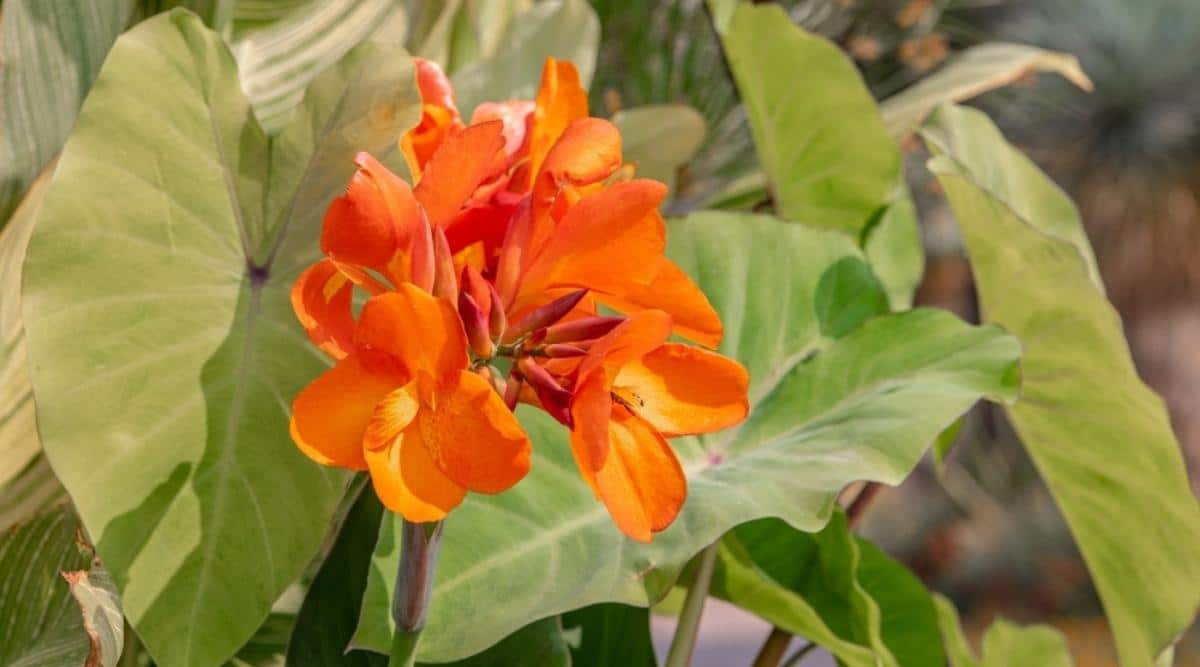
mchec.org – The Canna Lily (Canna indica) is a stunning flowering plant known for its bold, colorful blooms and lush, tropical foliage. Often associated with warm, tropical climates, the Canna Lily has become a popular addition to gardens and landscapes worldwide due to its striking appearance and ease of growth. Whether planted in garden beds, borders, or containers, these exotic flowers provide an instant splash of color and a touch of the tropics to any setting.
Botanical Description
Canna Lilies are herbaceous perennials that belong to the family Cannaceae. They grow from rhizomes, which help the plant store nutrients and survive through varying conditions. The plant’s height can range from 3 to 8 feet, depending on the variety. Canna Lilies are easily recognized by their large, banana-like leaves that come in shades of green, burgundy, or variegated patterns.
The showy flowers of the Canna Lily are its most striking feature. The blooms, which can appear in shades of red, orange, yellow, pink, or white, emerge on tall stalks and often last throughout the summer months. These flowers are slightly asymmetrical and have a tropical look, with some varieties having fringed or ruffled petals.
Habitat and Growth Conditions
Although native to tropical and subtropical regions of Central and South America, Canna Lilies have been widely cultivated and can thrive in a variety of climates. They prefer full sun and grow best in rich, well-draining soil. While they can tolerate a range of soil types, they thrive when given moist, fertile ground. In fact, Canna Lilies can even grow in wet conditions, making them ideal for planting near ponds or water features.
Canna Lilies are hardy in USDA zones 7 to 11. In colder regions, the rhizomes can be dug up and stored during the winter months, allowing them to be replanted in the spring once temperatures rise.
Ecological Importance
In addition to their ornamental value, Canna Lilies play an important role in supporting pollinators. The vibrant flowers attract bees, butterflies, and hummingbirds, providing a reliable source of nectar throughout the growing season. Some species of Canna are also used in wetlands and water purification projects due to their ability to thrive in waterlogged conditions and filter pollutants from the soil.
Cultivation and Care
Growing Canna Lilies is relatively easy, making them a popular choice for gardeners of all skill levels. The plants are typically grown from rhizomes, which can be planted in the spring after the threat of frost has passed. For best results, plant the rhizomes about 2 to 3 inches deep in well-drained soil with plenty of sunlight.
Canna Lilies need regular watering, especially during hot, dry periods. While they can tolerate short periods of drought, they prefer consistently moist soil. Fertilizing the plants with a balanced fertilizer every 4 to 6 weeks during the growing season can promote lush foliage and vibrant blooms.
To keep the plants looking their best, it’s recommended to deadhead spent flowers and remove any yellowing or damaged leaves. In regions with cold winters, gardeners should dig up the rhizomes in the fall, store them in a cool, dry place, and replant them in the spring.
Ornamental Uses
Canna Lilies are prized for their bold, tropical appearance, making them a fantastic choice for creating a dramatic focal point in the garden. They work well in mixed borders, large containers, or as a backdrop to lower-growing plants. Their large leaves and tall flower stalks create an impressive visual display, whether planted in formal gardens, tropical landscapes, or near water features.
In addition to their use in ornamental gardens, Canna Lilies are sometimes grown for their edible rhizomes, which are used in some cultures for cooking. The plant’s leaves are also used in basket weaving and other traditional crafts in certain regions.
Conclusion
The Canna Lily is an eye-catching plant that brings a touch of tropical elegance to any garden. With its bold, colorful blooms and lush foliage, it adds a dramatic flair to landscapes and provides essential support to pollinators. Whether grown in sunny garden beds, borders, or large pots, Canna Lilies are sure to make a statement. Their low-maintenance nature and versatility in a range of climates make them a favorite among gardeners looking to add vibrant, long-lasting beauty to their outdoor spaces.