
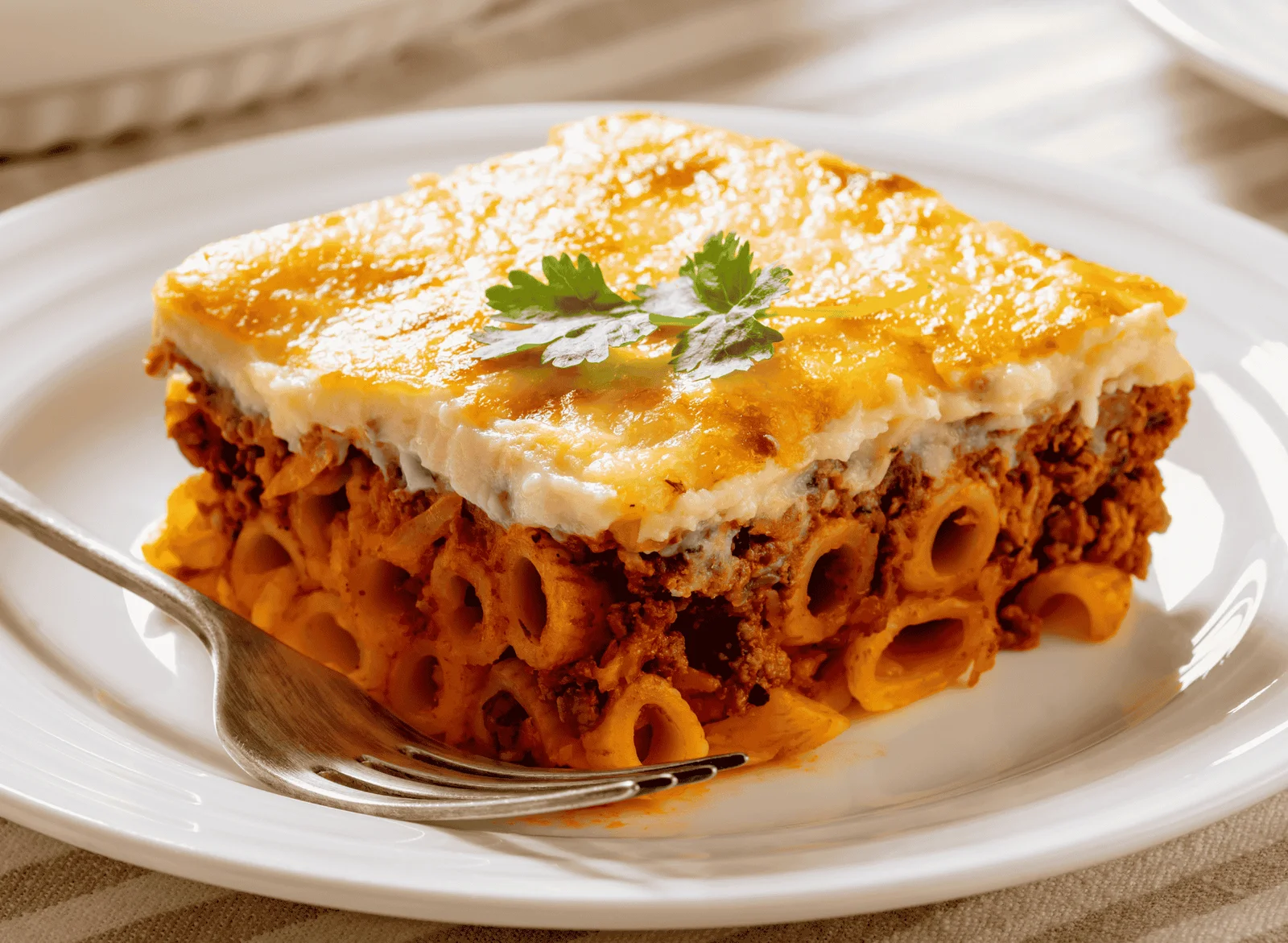
Pastitsio: The Greek Baked Pasta Delight

mchec.org – Pastitsio is a beloved Greek dish that combines layers of pasta, a savory meat sauce, and creamy béchamel topping to create a comforting and hearty meal. Often compared to lasagna, pastitsio has its own unique character, distinguished by its Mediterranean flavors and rich textures. This baked pasta dish is a staple in Greek cuisine, enjoyed by families and at festive gatherings alike.

The Origins of Pastitsio

The origins of pastitsio can be traced back to the culinary traditions of Italy and Greece, with influences from the Middle East as well. The dish’s name comes from the Italian word “pasticcio,” meaning a pie or a mess, which reflects its layered, casserole-like structure. Over time, the recipe was adapted to incorporate local Greek ingredients and flavors, evolving into the version we know today.

Key Ingredients

Pasta

The base of pastitsio is typically a tubular pasta like bucatini or penne, which holds up well during baking and provides a satisfying texture. The pasta is cooked and then layered with the meat sauce, forming the foundation of the dish.

Meat Sauce

Pastitsio features a rich and flavorful meat sauce, often made with ground beef or lamb. The sauce is cooked with onions, garlic, tomatoes, and a blend of spices such as cinnamon, allspice, and nutmeg, which give it a warm and aromatic quality. A splash of red wine is sometimes added for depth.

Béchamel Sauce

The hallmark of pastitsio is its luxurious béchamel sauce, which forms the top layer. Made from butter, flour, and milk, this creamy sauce is often enriched with eggs and cheese, creating a golden, velvety finish when baked.

The Art of Layering

Assembling pastitsio is a process of creating harmonious layers. The dish begins with a layer of cooked pasta, followed by a generous portion of the meat sauce. Another layer of pasta is added, and the dish is topped with a thick layer of béchamel sauce. The pastitsio is then baked until the top is golden and bubbling, allowing the flavors to meld together into a cohesive whole.

Variations and Regional Differences

While the classic version of pastitsio is well-known, there are variations across different regions and households. Some recipes include additional ingredients such as mushrooms, bell peppers, or spinach. The choice of cheese can also vary, with options like kefalotyri or Parmesan adding their distinct flavors.

Serving Suggestions

Pastitsio is often served as a main course, accompanied by a simple salad and a glass of robust red wine. Its rich and filling nature makes it perfect for family dinners or special occasions. Once baked, it is best allowed to cool slightly before serving, which helps the layers set and makes for easier slicing.

Conclusion

Pastitsio is a testament to the rich culinary traditions of Greece, offering a delicious blend of flavors and textures that are both comforting and satisfying. Its layered composition and distinctive taste make it a favorite among pasta lovers and a staple of Greek cuisine. Whether enjoyed as a weekday meal or a festive feast, pastitsio brings a taste of Greece to any table, celebrating the art of hearty, home-cooked food.
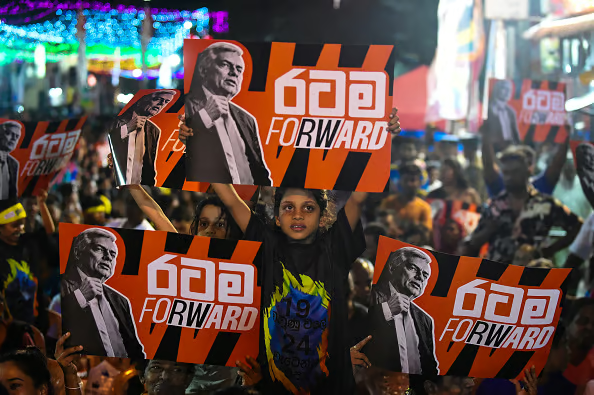
2024 Sri Lankan Presidential Election: Key Candidates

mchec.org – The 2024 Sri Lankan presidential election, held on September 21, 2024, marked a significant turning point in the country’s political landscape. With the nation still recovering from its worst-ever economic crisis, the election was crucial for determining the future direction of the country. This article delves into the key candidates and their campaigns, providing a comprehensive overview of the election.

Key Candidates

1. Ranil Wickremesinghe

Incumbent President Ranil Wickremesinghe ran for re-election as an independent candidate. He became the first sitting president to run for re-election since Mahinda Rajapaksa in 2015. Wickremesinghe’s campaign focused on the economic reforms he had implemented since taking office in 2022, which included stabilizing the economy and securing international financial support. Despite improvements in key economic indicators, his campaign faced criticism for not addressing the high cost of living and allegations of corruption.

2. Sajith Premadasa

Sajith Premadasa, the Leader of the Opposition and head of the United National Party (UNP), emerged as a strong contender. His campaign emphasized the need to combat corruption and improve governance. Premadasa promised to address the economic challenges by focusing on job creation and reducing the cost of living. His campaign also highlighted his experience in local governance and his commitment to national unity.

3. Anura Kumara Dissanayake

Anura Kumara Dissanayake, the leader of the Janatha Vimukthi Peramuna (JVP), led a left-wing coalition. His campaign was particularly popular among the youth and working-class voters. Dissanayake’s platform included promises to address income inequality, improve public services, and promote social justice. His campaign also focused on the need for political reform and greater transparency in governance.

4. Namal Rajapaksa

Namal Rajapaksa, son of former President Mahinda Rajapaksa, entered the race as a surprise candidate. His campaign was supported by the influential Rajapaksa family, which has a strong political legacy in Sri Lanka. Namal’s platform included promises to restore economic stability and promote national unity. His campaign also emphasized the need for strong leadership and the continuation of his father’s policies.

5. Nuwan Bopage

Nuwan Bopage, a former Buddhist monk, ran on a platform that included the legalization of marijuana and the promotion of environmental policies. His campaign, while unconventional, garnered attention for its unique approach to addressing social and environmental issues in Sri Lanka.

Campaign Strategies

Economic Reforms and Stability

The economic crisis was a central theme in all campaigns. Candidates like Ranil Wickremesinghe and Namal Rajapaksa focused on their plans to stabilize the economy and attract foreign investment. Wickremesinghe highlighted his achievements in securing international financial support and implementing economic reforms, while Rajapaksa promised to restore economic stability through strong leadership and policy continuity.

Corruption and Governance

Sajith Premadasa’s campaign heavily emphasized the need to combat corruption and improve governance. He promised to implement measures to ensure transparency and accountability in government operations. His campaign also focused on the need for job creation and reducing the cost of living, appealing to voters concerned about economic hardships.

Social Justice and Political Reform

Anura Kumara Dissanayake’s campaign was centered on social justice and political reform. He promised to address income inequality, improve public services, and promote social justice. His campaign also focused on the need for political reform and greater transparency in governance, appealing to younger voters and those seeking change.

Unconventional Approaches

Nuwan Bopage’s campaign stood out for its unconventional approach. He focused on environmental policies and the legalization of marijuana, which garnered attention but also faced criticism for being too radical. His campaign highlighted the need for innovative solutions to address social and environmental issues in Sri Lanka.

Conclusion

The 2024 Sri Lankan presidential election was a pivotal moment in the country’s political history. The key candidates, each with their unique platforms and campaign strategies, vied for the support of the electorate. As Sri Lanka continues to recover from its economic crisis, the election results will play a crucial role in shaping the country’s future direction.