
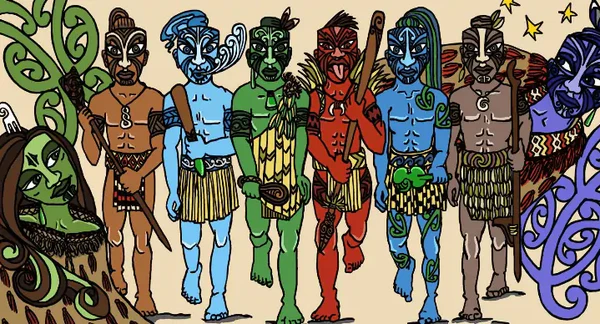
Māori Mythology: Gods, Heroes, & Legends of Aotearoa

mchec.org – Māori mythology, rich in stories of gods, heroes, and supernatural beings, forms the cornerstone of the Māori worldview and cultural heritage. These myths and legends are more than just stories; they are powerful vehicles for conveying the values, beliefs, and history of the Māori people. From the creation of the world to the heroic deeds of legendary figures, Māori mythology reflects the deep spiritual connection between humans, nature, and the divine. This article delves into the gods, heroes, and legends that shape Māori mythology, offering a glimpse into the fascinating world of Aotearoa’s ancient traditions.

The Creation Myth: Te Kore and Te Pō

Māori mythology begins with the creation of the world. According to the whakapapa (genealogy) of Māori myth, the universe was formed from a vast nothingness known as Te Kore (the void) and the dark expanse of Te Pō (the night). The first gods emerged from this primordial state, creating the world and its natural elements.

At the heart of the creation story is the union of Ranginui (the Sky Father) and Papatūānuku (the Earth Mother), whose embrace kept the world in darkness. Their many children, including the gods of the elements and natural forces, grew restless in the confined space between their parents. In an act of defiance, Tāne Mahuta, the god of forests and birds, separated his parents, allowing light to enter the world and giving birth to the land, the sea, and the sky.

This act of separation was a pivotal moment in Māori cosmology, symbolizing the birth of the physical world and the establishment of order from chaos. It also created the space for the gods and heroes to continue their work in shaping the world and its inhabitants.

The Gods of Māori Mythology

Māori mythology is populated by a vast array of gods and supernatural beings, each of whom is responsible for different aspects of the natural and spiritual world. These gods are often depicted as powerful forces with human-like traits, capable of both good and ill.

Tāne Mahuta – The God of Forests and Birds

Tāne Mahuta is one of the most significant gods in Māori mythology. As the god of forests and birds, he is credited with creating the first human beings. According to the myth, Tāne fashioned the first woman, Hine-ahu-one, from the earth, breathing life into her. This act of creation made Tāne the progenitor of humankind and a key figure in Māori cosmogony.

Tāne’s influence extends beyond the creation of humans. He is also associated with the forests, trees, and animals, playing a crucial role in maintaining the balance of nature.

Tangaroa – The God of the Sea

Tangaroa, the god of the sea, is another central deity in Māori mythology. He is responsible for the oceans, fish, and sea creatures, and his domain is vast and mysterious. Tangaroa is often depicted as both a benevolent provider and a dangerous force, capable of flooding the land or providing an abundance of fish and seafood.

Tangaroa is also one of the children of Ranginui and Papatūānuku, and his influence over the sea is integral to Māori culture, as the sea has historically provided food, transportation, and spiritual significance to Māori communities.

Tāwhirimātea – The God of Storms

Tāwhirimātea, the god of storms and winds, is a fierce and volatile deity. He is the son of Ranginui and Papatūānuku and became enraged when his parents were separated. In his anger, Tāwhirimātea waged war against his brothers, particularly Tāne Mahuta and Tangaroa, who had played a role in the separation. His temper manifests in the form of violent storms, thunder, and lightning, causing chaos in the natural world.

Tāwhirimātea’s wrath symbolizes the power of nature’s destructive forces, and his role highlights the Māori belief in the interconnection between humans and the environment. His anger is a reminder of the need to respect the forces of nature.

Rūaumoko – The God of Earthquakes and Volcanoes

Rūaumoko, the god of earthquakes and volcanoes, is another son of Ranginui and Papatūānuku. While he remains hidden in the earth, his presence is felt through the tremors of earthquakes and the eruptions of volcanoes. Rūaumoko’s movements beneath the earth are believed to stir the land, causing shifts in the landscape and sometimes bringing destruction.

In Māori thought, Rūaumoko is closely tied to the land’s vitality and the renewal of life. His eruptions, though destructive, also bring fertile soil, which nourishes the land and provides sustenance to Māori communities.

Legendary Heroes and Figures

Māori mythology is also filled with legendary heroes whose actions shaped the world and who embody the values of bravery, wisdom, and respect for nature. These figures are often seen as demigods or semi-divine beings who bridge the gap between gods and humans.

Māui – The Trickster and Cultural Hero

Māui is perhaps the most famous figure in Māori mythology. Known for his cleverness, mischievousness, and adventurous spirit, Māui is a trickster god who performs many feats to benefit humanity. His exploits include fishing up the North Island of New Zealand, Te Ika-a-Māui (the Fish of Māui), using a magical fishhook made from the jawbone of his grandmother, and slowing the sun to lengthen the days for his people.

Māui’s stories often illustrate his struggle against the natural world, as he challenges the gods and forces of nature for the benefit of humankind. While Māui’s actions were often self-serving, his character also embodies values of resourcefulness, ingenuity, and the importance of perseverance.

Tāwhaki – The Ascendant Hero

Tāwhaki is another celebrated hero in Māori mythology. Known for his pursuit of knowledge and spiritual power, Tāwhaki ascended to the heavens to seek his ancestors and gain wisdom. His journey involved overcoming trials, facing the wrath of the gods, and ultimately achieving enlightenment. Tāwhaki’s story is one of personal transformation and the quest for higher knowledge, which makes him an important figure in Māori mythology, particularly in the context of spiritual development and growth.

Hinemoa and Tūtānekai – The Tragic Love Story

One of the most enduring Māori legends is the story of Hinemoa and Tūtānekai, a tale of love, separation, and reconciliation. Hinemoa, a beautiful woman from the tribal village of Ōpotiki, fell in love with Tūtānekai, who lived on the distant Mokoia Island in Lake Rotorua. Despite the distance and the disapproval of her family, Hinemoa swam across the lake to be with her lover. Her determination and love overcame the challenges, and the couple eventually reunited.

This story is celebrated as an example of devotion and perseverance, highlighting the Māori values of love, loyalty, and the power of the human spirit.

Conclusion

Māori mythology is a vast and intricate tapestry of gods, heroes, and legends that offer insight into the worldview and values of the Māori people. These myths are not only stories of the past but living traditions that continue to inform Māori culture, language, and identity today. Through the tales of gods like Tāne Mahuta and Tangaroa, and heroes like Māui and Tāwhaki, Māori mythology teaches timeless lessons about the balance of nature, the power of the human spirit, and the interconnectedness of all life. As Aotearoa continues to celebrate and preserve its rich cultural heritage, Māori mythology remains a vital part of the nation’s identity, shaping its future while honoring its past.
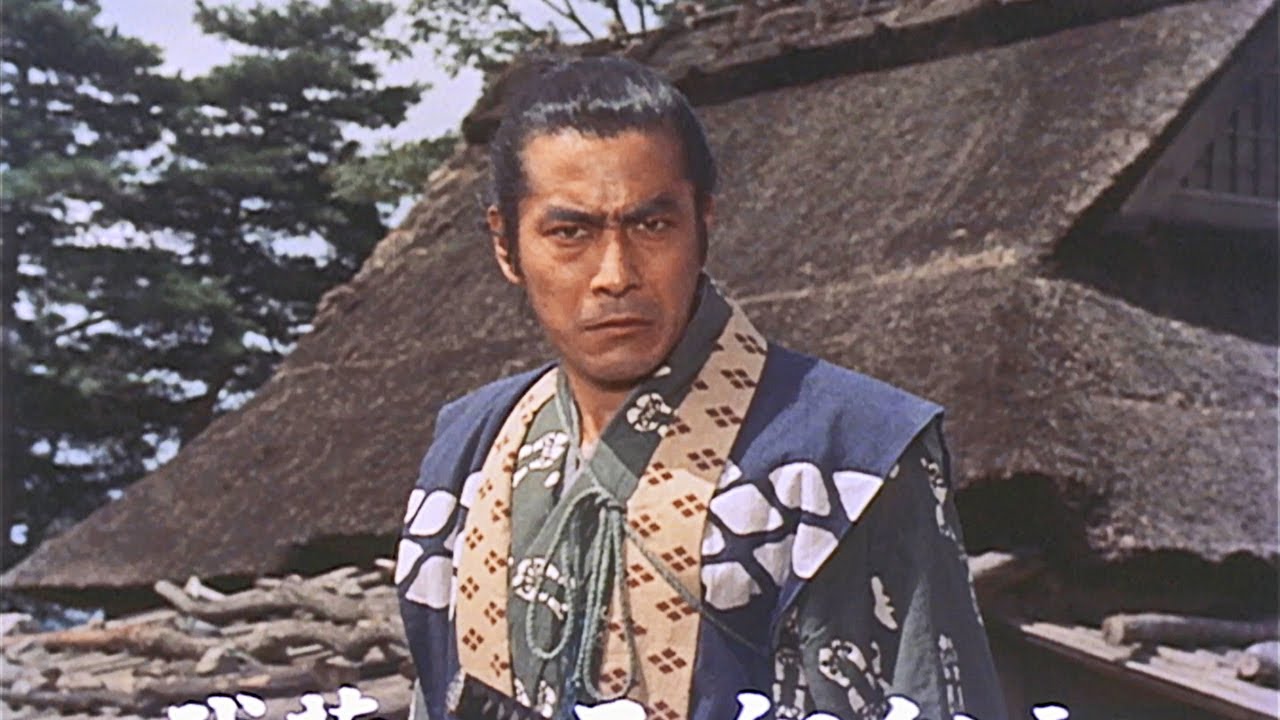
Samurai I: Musashi Miyamoto (1954) – The Birth of a Legend

mchec.org – Released in 1954, Samurai I: Musashi Miyamoto is the first installment of Hiroshi Inagaki’s acclaimed Samurai Trilogy, a cinematic adaptation of Eiji Yoshikawa’s novel Musashi. The film chronicles the early life of Japan’s legendary swordsman, Miyamoto Musashi, blending historical drama with poetic storytelling. This iconic film has left a lasting impact on Japanese cinema and is widely regarded as one of the defining samurai films of its time.

The Story of a Warrior’s Transformation

The film follows the journey of Takezo (later Musashi), a hot-headed young man seeking glory and fame as a warrior. At the beginning of the story, Takezo is more of a brute than a refined samurai, filled with a raw and untamed desire for adventure. He sets off with his childhood friend Matahachi to join the battle of Sekigahara in hopes of earning fame, but the war turns into a disastrous defeat for their side.

Takezo’s early recklessness gets him into trouble, and he is branded a criminal. However, after crossing paths with several mentors, including a Buddhist priest named Takuan, he begins a path of spiritual and personal transformation. Through his trials, Takezo eventually matures into Musashi Miyamoto, a disciplined and honorable samurai dedicated to mastering the way of the sword.

This journey from a wild, rebellious youth to a focused and disciplined swordsman sets the stage for Musashi’s evolution into one of the greatest samurai in Japanese history.

Themes of Redemption and Growth

At its core, Samurai I: Musashi Miyamoto is a tale of personal redemption and growth. Takezo’s transformation from a wild warrior to a thoughtful and skilled swordsman mirrors the timeless themes of self-discipline, honor, and enlightenment that are central to samurai philosophy. The film emphasizes the importance of inner strength and mental clarity over mere physical prowess, a theme that resonates throughout the entire Samurai Trilogy.

Inagaki’s direction also captures the spiritual and emotional dimensions of Musashi’s journey. Takezo’s internal struggles are depicted with the same intensity as the external battles he faces, making the film not just an action-packed samurai drama but also a thoughtful character study.

Visual Style and Cinematic Excellence

Samurai I is renowned for its sweeping cinematography, beautifully capturing the landscapes of feudal Japan. The film’s wide, picturesque shots, combined with carefully choreographed action scenes, immerse the audience in the historical world of the samurai. The visual aesthetic is complemented by a strong musical score, enhancing the emotional weight of Musashi’s trials.

In addition to the film’s visual elegance, Toshiro Mifune’s portrayal of Musashi Miyamoto is a major highlight. Mifune, one of Japan’s most celebrated actors, delivers a performance filled with raw intensity and nuance, perfectly embodying the transformation of the impulsive Takezo into the thoughtful and formidable Musashi.

Reception and Cultural Impact

Upon its release, Samurai I: Musashi Miyamoto was met with widespread acclaim both in Japan and internationally. The film went on to win the Academy Award for Best Foreign Language Film in 1955, further cementing its status as a global classic. Its success paved the way for the following two films in the trilogy, Samurai II: Duel at Ichijoji Temple (1955) and Samurai III: Duel at Ganryu Island (1956), which continue Musashi’s journey toward becoming a legendary swordsman.

The film also helped popularize the image of Miyamoto Musashi as not only a historical figure but as a cultural icon, celebrated for his mastery of strategy and martial arts. Musashi’s philosophy of Bushido and his famous treatise, The Book of Five Rings, continue to inspire generations of martial artists and thinkers.

A Timeless Samurai Classic

Samurai I: Musashi Miyamoto remains a quintessential film in the samurai genre. Its blend of action, philosophy, and character development sets it apart as a deeply resonant and engaging work. For many, the film serves as an introduction to the life of Musashi Miyamoto, whose legend continues to captivate audiences worldwide.

As the first entry in Hiroshi Inagaki’s Samurai Trilogy, this film is an essential piece of cinema that masterfully tells the story of one of Japan’s most celebrated warriors. Its exploration of growth, honor, and redemption, combined with powerful performances and stunning visuals, has ensured its place as a timeless classic in the annals of world cinema.

Black Virgin Mountain: A Spiritual and Scenic Marvel

mchec.org – Black Virgin Mountain, known as Núi Bà Đen in Vietnamese, is a captivating destination located in Tây Ninh Province, southern Vietnam. Standing at 986 meters (3,235 feet), it is the highest peak in the region and offers a blend of natural beauty, cultural significance, and spiritual allure.

A Landmark of Legends

Black Virgin Mountain is steeped in legend and local folklore. The most famous tale tells of a young woman named Ba Den, who faced numerous challenges and ultimately disappeared on the mountain. In honor of her story, the mountain was named Núi Bà Đen, or Black Virgin Mountain, and it has since become a place of pilgrimage and spiritual reflection.

Trekking and Exploration

For adventurers and nature lovers, Black Virgin Mountain provides an array of activities and experiences. The mountain is crisscrossed with trails that cater to hikers of all levels, from casual walkers to experienced trekkers. As you ascend, you’ll be rewarded with breathtaking views of the surrounding countryside, lush forests, and the intricate network of rivers and canals that characterize the region.

Spiritual Significance

Black Virgin Mountain is not only known for its natural beauty but also for its spiritual importance. At the base of the mountain lies the Ba Den Pagoda, a sacred site that attracts thousands of pilgrims and visitors each year, especially during the annual Ba Den Mountain Festival. The area is dotted with temples, shrines, and statues that reflect the deep-rooted religious traditions of the region, providing a peaceful setting for meditation and contemplation.

Modern Access

In recent years, accessibility to Black Virgin Mountain has been enhanced with the introduction of a cable car system. This modern addition allows visitors to effortlessly reach the summit, offering panoramic views of the lush landscapes below. The cable car ride is an attraction in itself, providing a scenic and leisurely way to experience the mountain’s beauty.

A Cultural Experience

Visiting Black Virgin Mountain is also an opportunity to immerse yourself in the local culture. The surrounding area is home to vibrant markets, traditional food stalls, and community events that offer insights into the daily life and customs of the people living in Tây Ninh Province. Whether you’re sampling local delicacies or engaging with friendly locals, the cultural richness of the region adds depth to your visit.

Conclusion

Black Virgin Mountain is a destination that captivates with its blend of natural splendor, spiritual significance, and cultural richness. Whether you’re trekking its trails, exploring its sacred sites, or enjoying the modern comforts of the cable car, a visit to Black Virgin Mountain promises a memorable and enriching experience in the heart of southern Vietnam.