mchec.org – Māori mythology, rich in stories of gods, heroes, and supernatural beings, forms the cornerstone of the Māori worldview and cultural heritage. These myths and legends are more than just stories; they are powerful vehicles for conveying the values, beliefs, and history of the Māori people. From the creation of the world to the heroic deeds of legendary figures, Māori mythology reflects the deep spiritual connection between humans, nature, and the divine. This article delves into the gods, heroes, and legends that shape Māori mythology, offering a glimpse into the fascinating world of Aotearoa’s ancient traditions.
The Creation Myth: Te Kore and Te Pō
Māori mythology begins with the creation of the world. According to the whakapapa (genealogy) of Māori myth, the universe was formed from a vast nothingness known as Te Kore (the void) and the dark expanse of Te Pō (the night). The first gods emerged from this primordial state, creating the world and its natural elements.
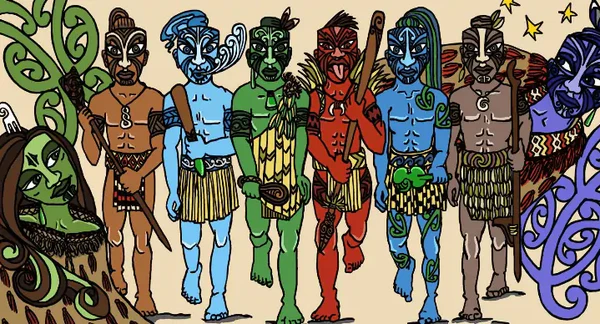
At the heart of the creation story is the union of Ranginui (the Sky Father) and Papatūānuku (the Earth Mother), whose embrace kept the world in darkness. Their many children, including the gods of the elements and natural forces, grew restless in the confined space between their parents. In an act of defiance, Tāne Mahuta, the god of forests and birds, separated his parents, allowing light to enter the world and giving birth to the land, the sea, and the sky.
This act of separation was a pivotal moment in Māori cosmology, symbolizing the birth of the physical world and the establishment of order from chaos. It also created the space for the gods and heroes to continue their work in shaping the world and its inhabitants.
The Gods of Māori Mythology
Māori mythology is populated by a vast array of gods and supernatural beings, each of whom is responsible for different aspects of the natural and spiritual world. These gods are often depicted as powerful forces with human-like traits, capable of both good and ill.
Tāne Mahuta – The God of Forests and Birds
Tāne Mahuta is one of the most significant gods in Māori mythology. As the god of forests and birds, he is credited with creating the first human beings. According to the myth, Tāne fashioned the first woman, Hine-ahu-one, from the earth, breathing life into her. This act of creation made Tāne the progenitor of humankind and a key figure in Māori cosmogony.
Tāne’s influence extends beyond the creation of humans. He is also associated with the forests, trees, and animals, playing a crucial role in maintaining the balance of nature.
Tangaroa – The God of the Sea
Tangaroa, the god of the sea, is another central deity in Māori mythology. He is responsible for the oceans, fish, and sea creatures, and his domain is vast and mysterious. Tangaroa is often depicted as both a benevolent provider and a dangerous force, capable of flooding the land or providing an abundance of fish and seafood.
Tangaroa is also one of the children of Ranginui and Papatūānuku, and his influence over the sea is integral to Māori culture, as the sea has historically provided food, transportation, and spiritual significance to Māori communities.
Tāwhirimātea – The God of Storms
Tāwhirimātea, the god of storms and winds, is a fierce and volatile deity. He is the son of Ranginui and Papatūānuku and became enraged when his parents were separated. In his anger, Tāwhirimātea waged war against his brothers, particularly Tāne Mahuta and Tangaroa, who had played a role in the separation. His temper manifests in the form of violent storms, thunder, and lightning, causing chaos in the natural world.
Tāwhirimātea’s wrath symbolizes the power of nature’s destructive forces, and his role highlights the Māori belief in the interconnection between humans and the environment. His anger is a reminder of the need to respect the forces of nature.
Rūaumoko – The God of Earthquakes and Volcanoes
Rūaumoko, the god of earthquakes and volcanoes, is another son of Ranginui and Papatūānuku. While he remains hidden in the earth, his presence is felt through the tremors of earthquakes and the eruptions of volcanoes. Rūaumoko’s movements beneath the earth are believed to stir the land, causing shifts in the landscape and sometimes bringing destruction.
In Māori thought, Rūaumoko is closely tied to the land’s vitality and the renewal of life. His eruptions, though destructive, also bring fertile soil, which nourishes the land and provides sustenance to Māori communities.
Legendary Heroes and Figures
Māori mythology is also filled with legendary heroes whose actions shaped the world and who embody the values of bravery, wisdom, and respect for nature. These figures are often seen as demigods or semi-divine beings who bridge the gap between gods and humans.
Māui – The Trickster and Cultural Hero
Māui is perhaps the most famous figure in Māori mythology. Known for his cleverness, mischievousness, and adventurous spirit, Māui is a trickster god who performs many feats to benefit humanity. His exploits include fishing up the North Island of New Zealand, Te Ika-a-Māui (the Fish of Māui), using a magical fishhook made from the jawbone of his grandmother, and slowing the sun to lengthen the days for his people.
Māui’s stories often illustrate his struggle against the natural world, as he challenges the gods and forces of nature for the benefit of humankind. While Māui’s actions were often self-serving, his character also embodies values of resourcefulness, ingenuity, and the importance of perseverance.
Tāwhaki – The Ascendant Hero
Tāwhaki is another celebrated hero in Māori mythology. Known for his pursuit of knowledge and spiritual power, Tāwhaki ascended to the heavens to seek his ancestors and gain wisdom. His journey involved overcoming trials, facing the wrath of the gods, and ultimately achieving enlightenment. Tāwhaki’s story is one of personal transformation and the quest for higher knowledge, which makes him an important figure in Māori mythology, particularly in the context of spiritual development and growth.
Hinemoa and Tūtānekai – The Tragic Love Story
One of the most enduring Māori legends is the story of Hinemoa and Tūtānekai, a tale of love, separation, and reconciliation. Hinemoa, a beautiful woman from the tribal village of Ōpotiki, fell in love with Tūtānekai, who lived on the distant Mokoia Island in Lake Rotorua. Despite the distance and the disapproval of her family, Hinemoa swam across the lake to be with her lover. Her determination and love overcame the challenges, and the couple eventually reunited.
This story is celebrated as an example of devotion and perseverance, highlighting the Māori values of love, loyalty, and the power of the human spirit.
Conclusion
Māori mythology is a vast and intricate tapestry of gods, heroes, and legends that offer insight into the worldview and values of the Māori people. These myths are not only stories of the past but living traditions that continue to inform Māori culture, language, and identity today. Through the tales of gods like Tāne Mahuta and Tangaroa, and heroes like Māui and Tāwhaki, Māori mythology teaches timeless lessons about the balance of nature, the power of the human spirit, and the interconnectedness of all life. As Aotearoa continues to celebrate and preserve its rich cultural heritage, Māori mythology remains a vital part of the nation’s identity, shaping its future while honoring its past.